Remember MapQuest? Yeah, that MapQuest. The one you printed directions from in 2004 before your road trip, the one with the little printer icon and the turn-by-turn you laid across the passenger seat. It's still alive. And it just did something none of the big boys — not Google, not Waze, not Apple — had the guts to do.
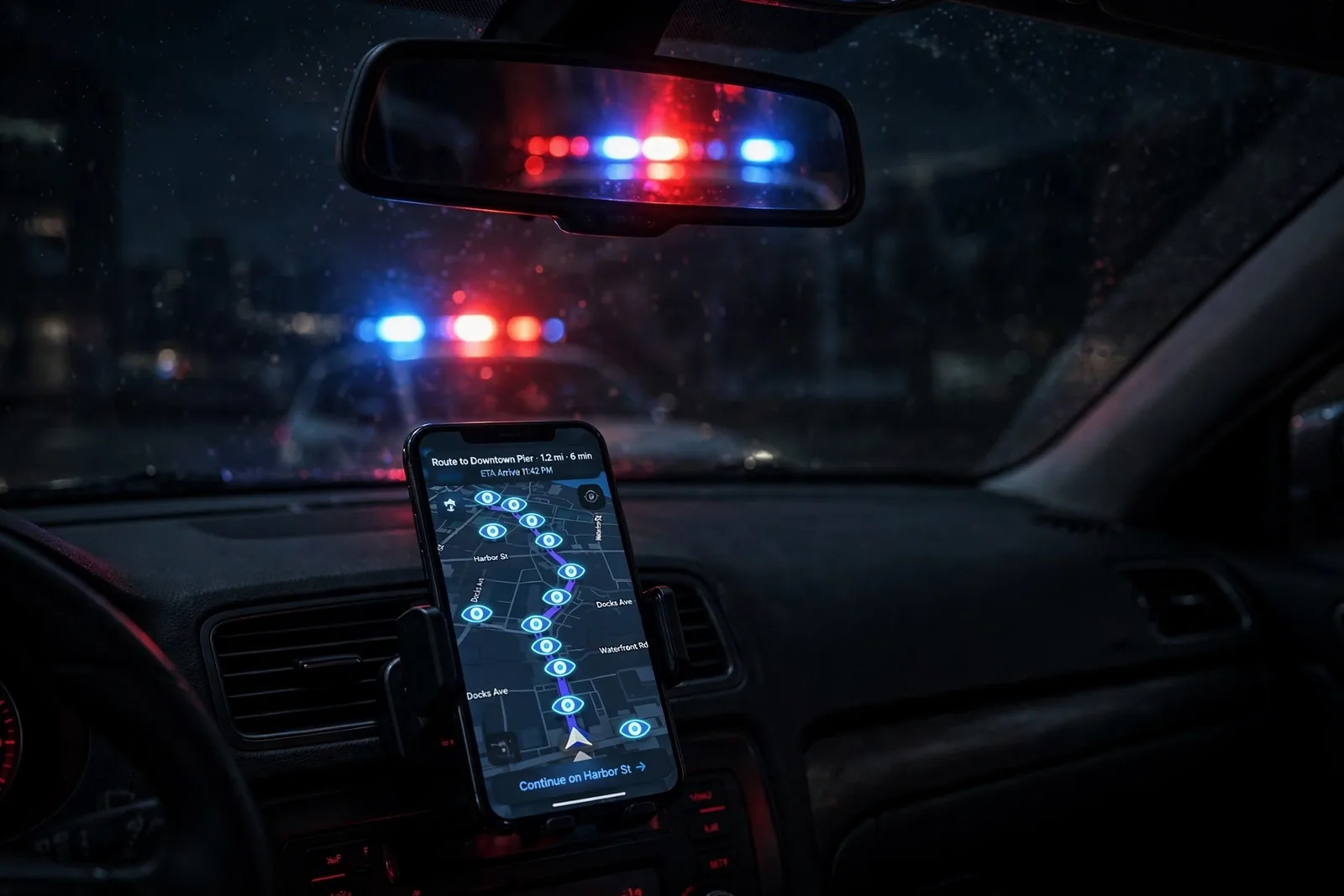
On October 15th, MapQuest rolled out something called the Surveillance Layer. Their tagline? “The Roads Have Eyes!”
Remember MapQuest? Yeah, that MapQuest. The one you printed directions from in 2004 before your road trip, the one with the little printer icon and the turn-by-turn you laid across the passenger seat. It's still alive. And it just did something none of the big boys — not Google, not Waze, not Apple — had the guts to do.
On October 15th, MapQuest rolled out something called the Surveillance Layer. Their tagline? "The Roads Have Eyes!"
Open the app, hit Map Options, flip on the Surveillance toggle, and suddenly your route lights up with little eye-shaped markers. Each one is a camera. Mostly license plate readers — the kind that photograph your plate, log your location, stamp the time, and feed it all into a database. MapQuest says "other outdoor surveillance cameras" can show up too, so don't be surprised if you see more than just plate readers on there.
And it's not just one company. The layer tracks eleven of them. Flock Safety — the big one, the one with cameras on damn near every suburban intersection in America. But also Motorola's Vigilant system, Genetec, Axis Communications, Axon, Leonardo's ELSAG, Neology, Rekor, PlateSmart, Ubicquia, and Verkada. Eleven different companies, all building the same thing: a record of where your car goes.
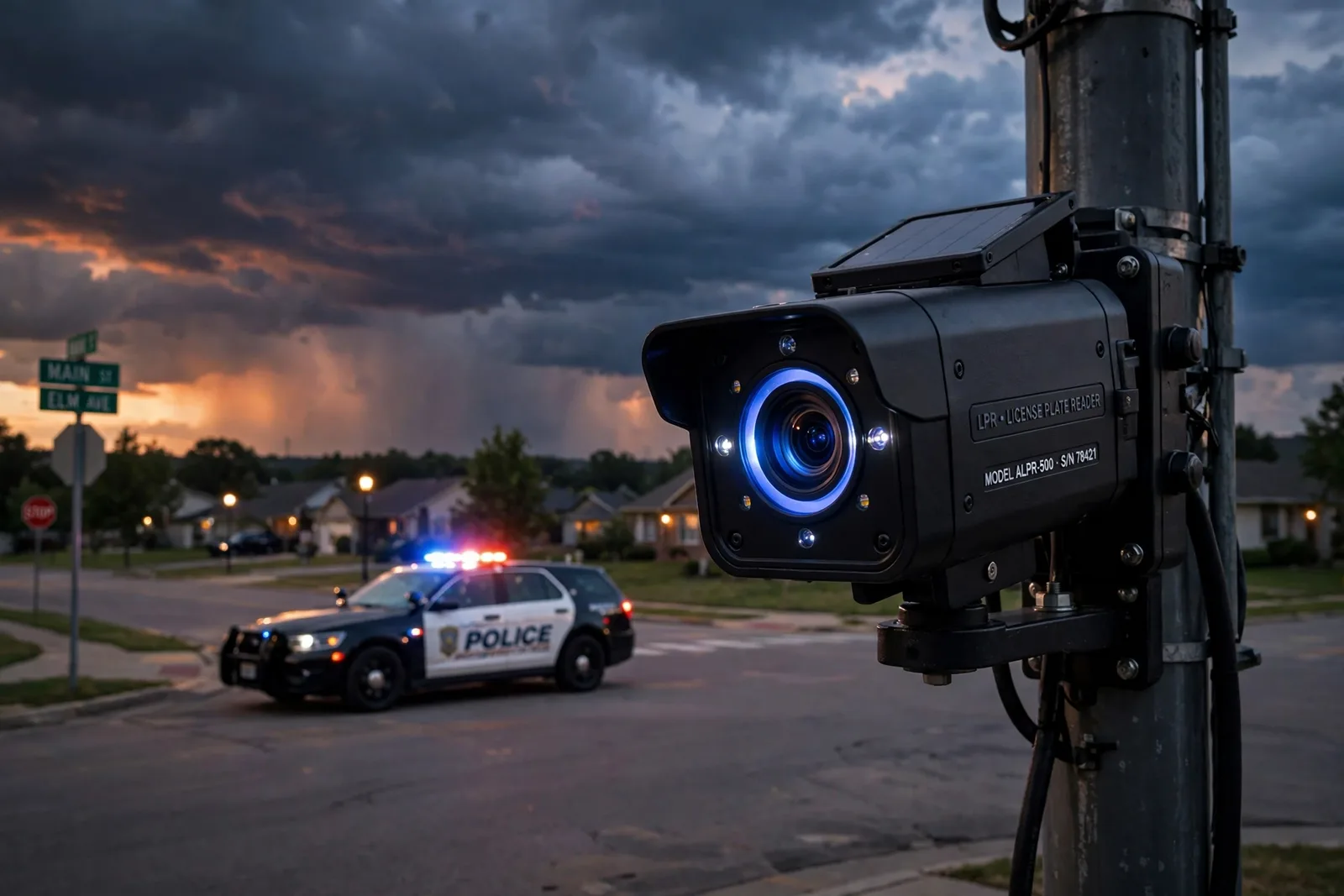
Now here's what MapQuest will tell you straight up — the data comes from OpenStreetMap, which is crowdsourced. Regular people reporting camera locations. That means it's incomplete. A road with no markers doesn't mean no cameras. It just means nobody's logged them yet. So don't treat it like a cloaking device. It's a flashlight, not an invisibility shield.
But the timing? The timing is everything.
Two weeks before MapQuest flipped the switch, a federal judge in Oklahoma — Judge Sara Hill — looked at how a sheriff's deputy used Flock's database and said what a lot of people have been thinking: this is unconstitutional. The deputy had searched a woman's plate for, in the judge's words, "no apparent reason" other than her car had California tags. Judge Hill called the whole system "a type of indiscriminate mass surveillance" that "collects information about all vehicles that pass by any network-connected camera at all times." She threw out everything that came from that search — including about 91 pounds of meth they found afterward. That's how serious she was.
Down in Texas, Governor Greg Abbott ordered state agencies to stop funding Flock cameras after the Texas Tribune found at least $30 million in state money had been steered toward the network. Thirty million. Of taxpayer dollars. For cameras that photograph your license plate every time you drive to work.
Flock's CEO, Garrett Langley, responded the way you'd expect — he asked Americans to compromise on privacy in exchange for safety. President Trump weighed in back in mid-September, praising the cameras.
And the culture? The culture's already decided. Somebody made a Grand Theft Auto mod where you drive around destroying Flock cameras in-game. That's where we're at.
Flock did make one concession — they cut their standard data-retention period from 30 days down to 7. Your plate photo used to sit in their system for a month. Now it's a week. Progress, I guess.
Here's what I keep coming back to. Nobody voted on this. No town hall, no referendum, no "hey, do you mind if we photograph your car everywhere you go and keep the records?" It just... happened. One camera on one intersection, then ten, then a thousand, then a network. And now you need a map app to tell you where you're being watched on your way to get groceries.
MapQuest didn't create the surveillance. They just made it visible. And maybe that's the most important thing anyone's done in this whole debate — because you can't have an opinion about something you can't see.
Turn on the layer. Look at your commute. Count the eyes.
Then ask yourself: when did you agree to this?
Brought to you by Team Murphy Media.
If you’d like us to continue this work and keep Shop Talk Weekly subscriptions free, consider making a donation: Cash App $dj7309 · PayPal paypal.me/dj7309. Can’t donate? Like, share & subscribe — that costs nothing and means everything.